
Curious About Joining Canopy as a Mentor?
Contributing to a growing national community of practice in One Health and emerging zoonoses.

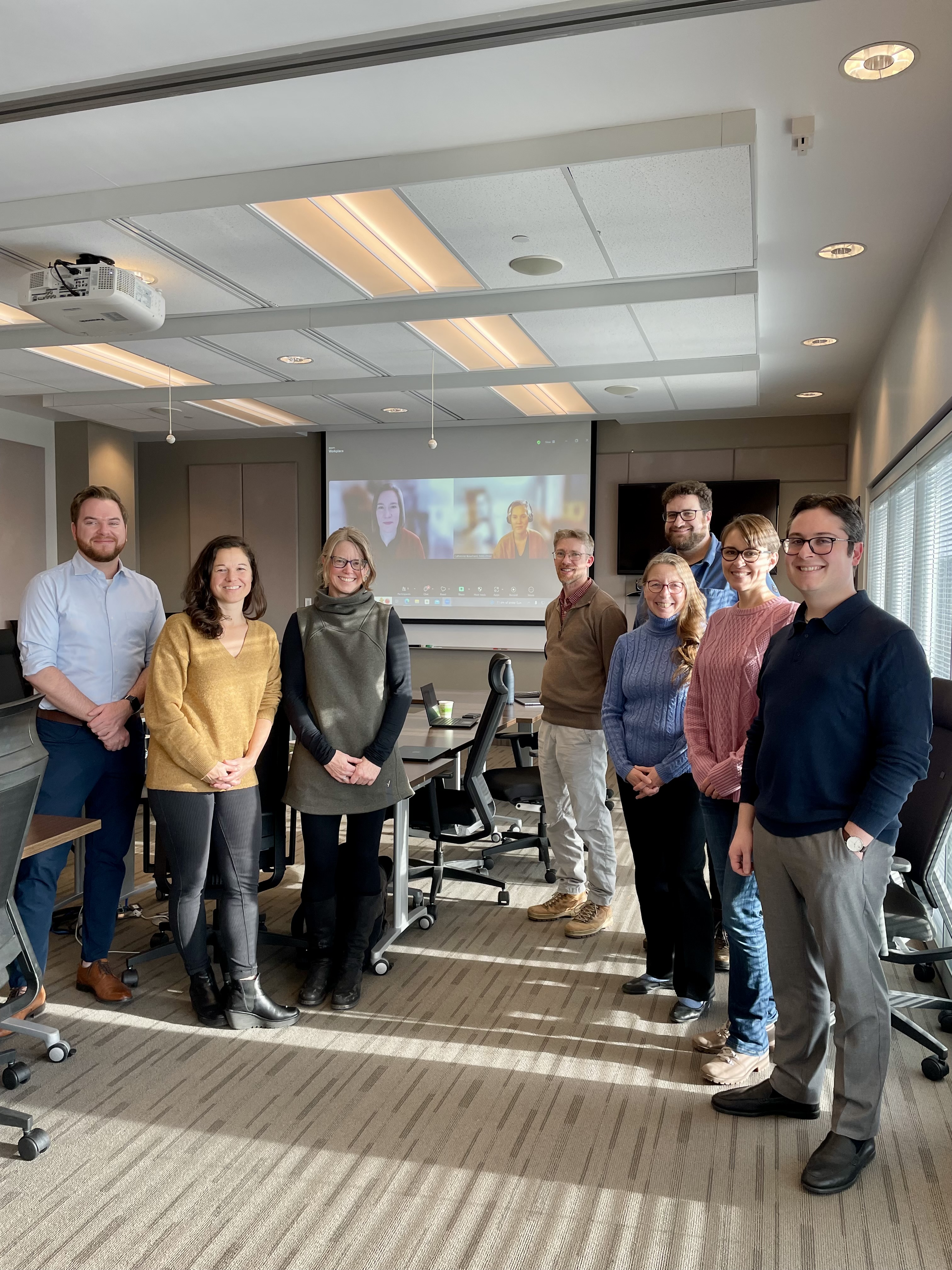
Canopy offers mentors from all sectors and disciplines the opportunity to support and inspire the next generation of One Health leaders. By mentoring trainees working at the intersection of human, animal, and environmental health, mentors contribute to a collaborative effort to address emerging zoonoses through systems thinking, equity, and transdisciplinary approaches.
The program values reciprocal relationships, where mentors share their expertise and experiences while at the same time gaining fresh insights, building new connections, and learning from each other. Mentorship within Canopy is rewarding and grounded in mutual respect, curiosity, and a shared commitment to real-world impact.

Support the growth of emerging leaders in One Health and help shape the future of research, policy, and practice in the field of emerging zoonoses.

Engage with trainees and other mentors from diverse backgrounds — and contribute to rich, cross-sectoral learning.

Connect with other mentors, researchers, professionals and individuals with lived experience across Canada and beyond working in One Health and emerging zoonoses.

Gain fresh perspectives and insights from curious, motivated trainees while you share your expertise and experiences. We view mentorship as a two-way learning process that can enrich both your own thinking and practice and that of the mentee.

Help foster a safe and inclusive community that welcomes individuals with a diversity of perspectives and backgrounds working in One Health and emerging zoonoses. As a mentor, you contribute to a broader, more representative pool of role models — helping trainees see themselves reflected among One Health leaders.
There are two paths to becoming a mentor in the Canopy program:
A trainee can contact you and ask if you are available and interested in mentoring them in the Canopy program.
If you agree, the trainee will submit their application to the Canopy program, identifying you as their proposed mentor.
You will be contacted by Canopy and asked to indicate your awareness of the trainee’s application, willingness to mentor the trainee, and acceptance of eligibility criteria and expectations of mentors. Your eligibility will be reviewed by the Canopy Executive Committee.
If the trainee’s application is successful, you will automatically be brought into the program as a mentor. If the trainee application is not successful, you are welcome to request to join by contacting Canopy directly (see Option 2, below)
Requesting to add your name and details to a list of potential mentors who are interested in mentoring a trainee in the Canopy program
Please contact info@canopytraining.ca with an expression of interest for joining the Canopy program as a mentor. In your email, please include your name, role, affiliation, sector(s) in which you work (academia, government, industry, or community/non-profit), and a description of how your experiences relate to One Health and emerging zoonoses.
Your request will be reviewed by the Canopy Executive Committee.
If your request is approved, you will be asked to agree to the expectations of mentors in the Canopy program, after which you will be added to a list of potential mentors who are interested in mentoring a trainee in the Canopy program.
We’ve gathered answers to some of the most common questions about eligibility, mentorship, funding, and timelines for Canopy trainee opportunities. If you don’t find what you’re looking for here, feel free to reach out to our team.
Individuals eligible to be a mentor are those working in one of the following sectors, with a depth of experience in topics related to One Health and emerging zoonoses:
With the exception of the MOOC, these activities are expected to total ~3 hours/month.
Canopy is dedicated to training the next generation of researchers, practitioners, and leaders to respond to emerging zoonotic threats with collaboration, innovation, and impact.

Canopy is one of five Health Research Training Platforms funded by the Canadian Institutes of Health Research (CIHR).